The real story of the Clashes between Muslims and Christians in Cairo on May 7th, 2011

Saturday night on the 7th of May 2011, a clash had erupted between fundamental Muslims and Orthodox Christians at an area called Imbaba in Cairo, Egypt. It was broadcast-ed allover the world that the clash was a result of a Christian lady that converted to Islam and the Church took custody of her and some Fundamental Muslims gathered at the church in numbers to take her out and release her and Orthodox Christians stood against them to defend their church. Without giving any details of the incident.

But the true story is exactly as the following:

A Christian Orthodox lady have fallen in love with a Muslim guy and got married to him and converted to Islam. But her family , as any Middle Eastern Orthodox family, didn’t like the idea of their daughter to get married to a guy outside of their religion. So they kidnapped the lady and took custody of her at the church. So her husband wanted to take back his beloved wife. So he called the police and then the chief of the police of his area took him and went to the church to talk to the people over there to take his wife back. The cop wanted to solve this problem peacefully , but group of the lady’s family stood against them and prevented them from taking her back. So the guy got mad , so he gathered his friends and many others to go and take his wife back by force and of-course fundamental Muslims knew about it, as they are already around that Imbaba area a lot, and they went to protest in-front of the church.

Then the clashes have started and then rumors around the area spread among both sides, that already live together in the same area peacefully, so every body started to gather his friends from the same religion and then the clashes increased and gun shots came up from some thugs.

At least 9 people have been killed from both sides and more than 170 injured. Military and Police forces interfered to stop the clashes and they built blockades around that area and fetish every body passing just to stop any more barbarian actions.

In my opinion, first of all , that lady’s family should not have taken custody of her by the church because that would automatically bring up questions and Fundamental Muslims will mis-understand it and think that the church is backing up such an action. And secondly , her family should not kidnap her and they should let her choose the one that she want to marry and spend the rest of her life with.

End of story and have a nice weekend every body.
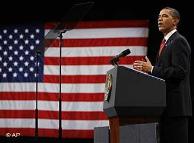
“The bottom line is, the war is ending”. Says Barack Obama

The U.S. military recently cut its strength to under 50,000 troops in Iraq, helping to make good on Obama’s promise to end the war launched 7-1/2 years ago by his Republican predecessor, George W. Bush.

Barack Obama
Barack Obama

Obama’s Saturday remarks may be a preview of a rare, televised address the president plans on Tuesday evening from the White House Oval Office about the troop drawdown.

“On Tuesday, after more than seven years, the United St

ates of America will end its combat mission in Iraq and take an important step for

ward in responsibly ending the Iraq war,” Obama said.

“As a candidate for this office, I pledged I would end this war. As president, that is what I am doing.”

Seven European Banks Fail Stress Tests

Seven of 91 European banks failed stress tests aimed at measuring their strength in case the continent’s government debt crisis takes a turn for the worse, regulators said Friday. European Union officials hope the results will reassure markets worried about hidden bank losses from the crisis.

The EU said the tests were tough and showed their banking system was resilient enough to weather a slower economy and more turbulance on financial markets.

The Committee of European Banking Supervisors said the seven banks would see their capital positions fall below levels deemed sufficient if there is a steep fall in the price of government bonds many of them hold, a worst-case scenario dubbed a “sovereign shock.”

Germany’s already-nationalized lender Hypo Real Estate Holding failed the strength test, but that had been widely expected. Five unlisted Spanish savings banks failed too, their finances battered by the collapse of a property boom: Diada, Unnim, Espiga, Banca Civica, and Cajasur, which was bailed out by the Bank of Spain in May.

Greece’s ATE bank failed too and confirmed that it would go ahead with a capital raising exercise.

In total the seven banks have to raise 3.5 billion euro to shore up their finances, CEBS said.

Policymakers around Europe hailed the process as confirmation that Europe’s banking system is in good health despite a government debt crisis and the deepest recession since World War II

The European Union said the results “confirm the overall resilience” of the continent’s banking system.

Christine Lagarde, France’s finance minister, said the tests were “tough” and “very comprehensive and as a result I would suggest that those results should be very credible and should raise the confidence in European banks.”

Investors are still poring over the results to see what to make of it all. Fears had been that the scenarios would not be tough enough to reassure markets, and the euro was trading around 0.5 percent lower at $1.2819.

“The stress tests do not seem that stressful and it is looking more like a political whitewash rather than a genuine attempt to reassure financial markets that eurozone banks have balance sheets that could really withstand sovereign risk shocks,” said Neil MacKinnon, global macro strategist at VTB Capital.

“They are delaying the day of reckoning,” said MacKinnon.

Anxiety about Europe’s banks mounted in tandem with the government debt crisis, which eventually led to euro110 billion ($142 billion) international bailout of Greece and a $1 trillion backstop for other troubled governments if they need it.

The worry was the banks were holding government bonds from the likes of Greece, especially as their finances had already been battered by the recession. Banks became more reluctant to lend to each other and many of Europe’s banks became more dependent on emergency funds from the European Central Bank for much of their day to day needs.